What AI Image Generators Still Get Wrong About Shared Spaces
2026-08-15
Keywords: generative AI, image generation, prompt engineering, multi-character scenes, spatial coherence, digital storytelling, AI limitations
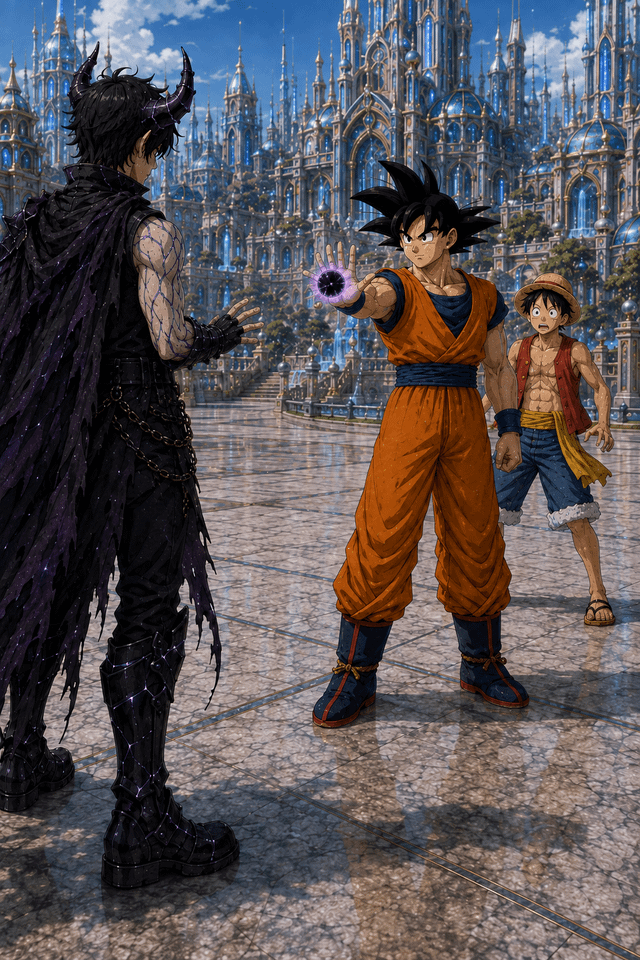
Visual storytelling has always demanded a keen sense of place. When multiple figures interact in a single setting their positions lighting and physical connections must feel natural. Yet generative image systems continue to stumble on exactly that task even as they produce impressive single subjects.
The Gap Between Elements and Environments
Creators working on crossover narratives frequently encounter outputs where characters seem dropped onto a background rather than existing inside it. Feet may not rest convincingly on surfaces shadows often fail to link figures to their surroundings and lighting can strike each person at contradictory angles. These flaws turn what should be an immersive anime style scene into an obvious collage.
The example of a newly arrived demon facing off against a group of established heroes illustrates the difficulty. Capturing one character stretching an arm while another teleports in to intercept an energy blast requires precise coordination of depth scale and motion lines. Current models rarely deliver that integration without extensive manual fixes.
Prompts That Target Physical Consistency
Explicit instructions can improve results. Users report better luck when they describe a single unified illustration viewed from one shared perspective with all participants obeying the same light source and ground plane. Requests for overlapping forms accurate relative sizing and shadows that tie characters to floors and each other add useful guardrails.
Still these adjustments deliver only partial success. The inconsistency across generations points to something deeper than wording. Models trained predominantly on isolated object recognition appear to lack robust internal representations of how multiple entities occupy and affect a common three dimensional space.
Real World Effects on Independent Creators
For writers producing illustrated light novels or digital comics the limitation creates a bottleneck. Time spent refining prompts and post processing images cuts into actual narrative development. Smaller teams without access to dedicated artists face pressure to accept lower quality visuals or abandon ambitious multi figure sequences entirely.
On a wider scale the problem affects adoption in professional pipelines. Concept artists and animation studios testing these tools for pre production work encounter the same fragmentation. If generative systems cannot reliably handle group dynamics their utility for complex storytelling stays limited.
Technical and Policy Questions Ahead
Developers face a choice between scaling existing architectures and introducing new capabilities such as explicit physics informed training or hybrid 3D aware pipelines. It remains unclear which path will close the cohesion gap most efficiently. Speculation about rapid fixes through bigger datasets alone seems optimistic given how long the issue has lingered.
From a policy view greater transparency about these constraints would help. As image generators spread into consumer applications regulators and platforms should consider how limitations in spatial understanding might influence misinformation risks or unrealistic expectations in educational and creative contexts. Intellectual property concerns also surface when well known characters from different franchises appear together in new works.
The core uncertainty is whether incremental prompt engineering can ever fully compensate for missing scene level comprehension. Until models demonstrate reliable environmental integration claims of human like creative output deserve careful scrutiny.